Round 01
/
08 Aug
Canadian GP

Calgary, Canada
McMahon Stadium
McMahon Stadium
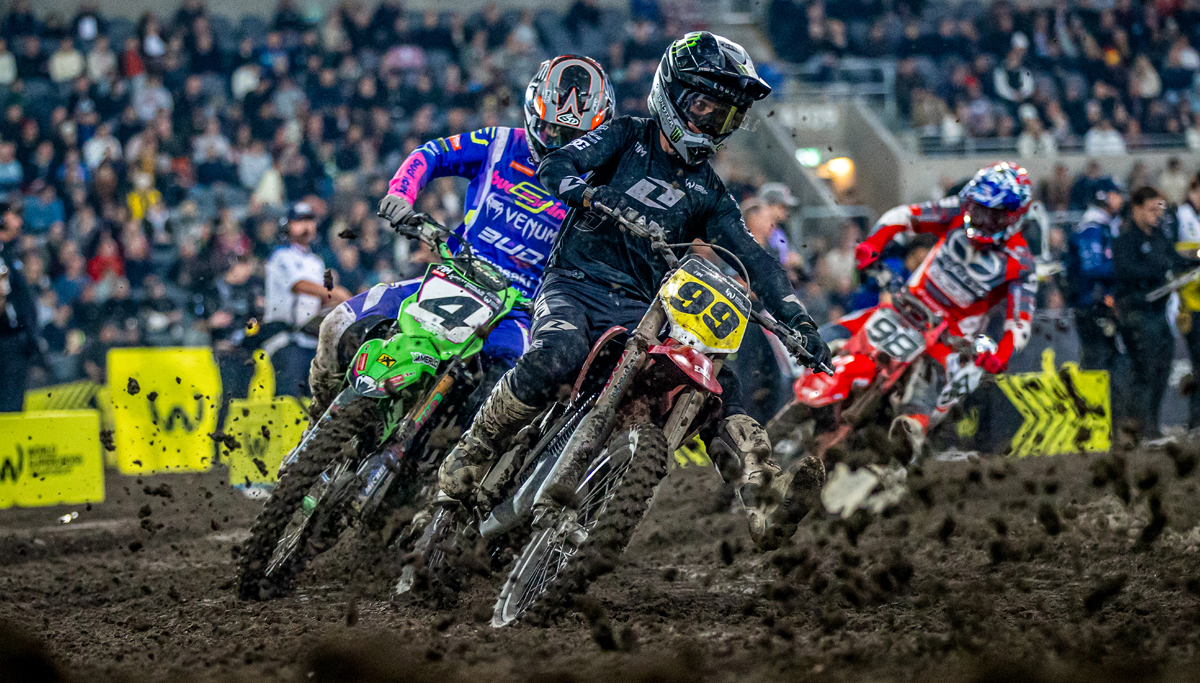
Since the 1970s, race formats have continually shifted and evolved. Initially, the sport mirrored outdoor motocross with a lengthy three-moto format which rewarded consistency across multiple races. While pure in competition terms, this system limited the number of riders who could appear in front of fans and it lacked the head-to-head intensity that defines Supercross today.
The move in 1976 to heats, semifinals, a Last Chance Qualifier (LCQ), and a main event marked a turning point. It created a ladder-style progression that built tension throughout the night. Later variations in the 1980s, particularly the short-lived ‘three rounds of racing’ system, demonstrated that fans valued seeing top riders compete multiple times in a single evening. Even if riders originally objected to the increased workload, the entertainment value was undeniable and it set the benchmark.
By the mid-1980s through the early 2000s, the format had again shifted and settled into what many consider a golden-era format: two heats, two semis, an LCQ, and a main event. This structure struck a balance between fairness and spectacle. Importantly, it maximised on-track action, giving fans six meaningful races per night while allowing for rivalries to develop organically across multiple encounters. The jam-packed schedule was a bonus for fans but logistically, it was becoming tough to mange operationally.
In 2007 there was a further shift to remove the semi-finals and relying on timed qualifying, two heats, an LCQ, and a final. The new format prioritised efficiency over show value and suited TV production timings. The streamlined version made scheduling easier but it came at a cost. Fans had been cut from six races to four and while ticket prices largely remained the same, there was a feeling that fans were now being short-changed.

The evolution of the format is now part of the Supercross identity. The World Supercross Championship recognises that today’s audience expects fast-paced, high-density entertainment. The current format sits at practice followed by a Super Pole shoot out and three motos, the main event runs as a longer length.
History shows us the most successful formats are those that balance sporting integrity with repeated, visible competition among top riders. Fans don’t just want a final but a story that unfolds over the course of the night.
As Supercross continues to evolve globally, the question is no longer just about efficiency or tradition. It’s about value. And if the past 50 years have shown anything, it’s that formats which maximise action, build rivalry, and keep fans engaged from the first gate drop to the last checkered flag are the ones that endure. That being said, there is always scope to evolve and try to new things to enhance that experience.