Round 01
/
08 Aug
Canadian GP

Calgary, Canada
McMahon Stadium
McMahon Stadium
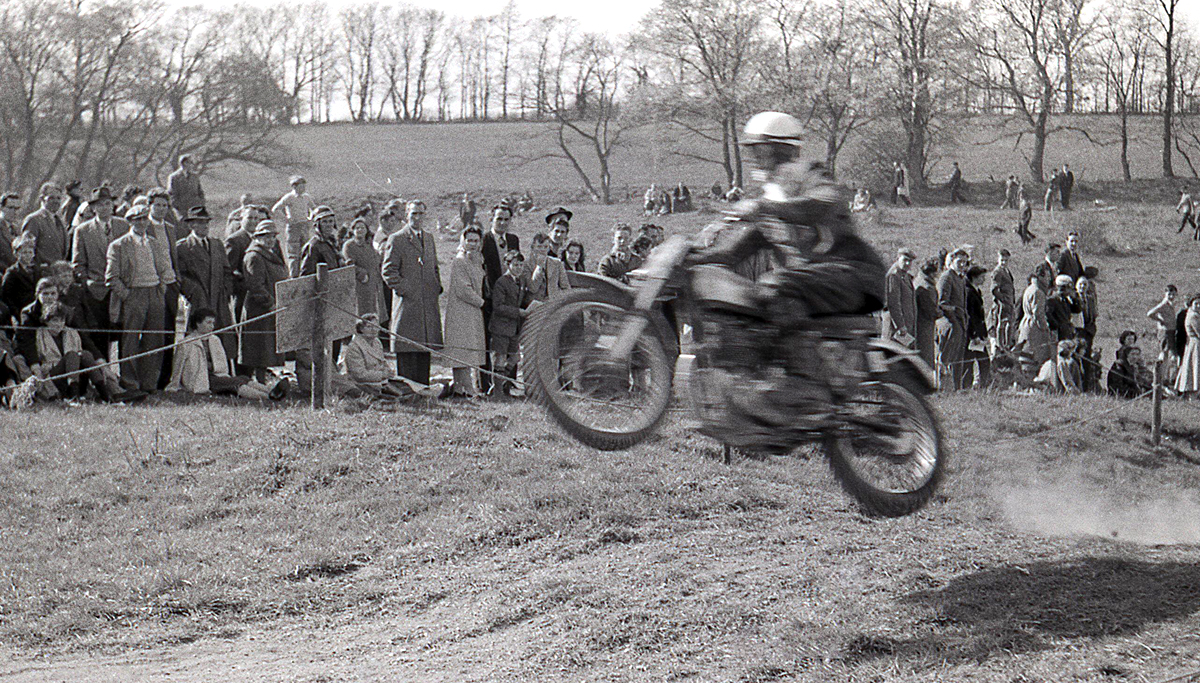
Long before packed stadiums in the United States roared with fans, early forms of motocross, then known as ‘scrambling’, were taking shape across the British countryside in the early 20th century.
The sport began as informal races over rough terrain, often organised by motorcycle clubs. These events evolved into more structured competitions, with one of the earliest landmark moments being the Scott Trial, first held in 1914 in North Yorkshire. Though technically a trials event, it helped popularise off-road motor racing.
By the 1920s and 1930s, purpose-built races, the scrambles, were becoming widespread across England, featuring riders navigating muddy hills, grass tracks, and natural obstacles.
The term “motocross” itself is a blend of “motorcycle” and “cross country,” came into common use in Britain after World War II. The sport gained international attention with events like the Motocross des Nations, first held in 1947.
British riders dominated early competitions, helping establish the UK as the sport’s epicentre during its formative years. As motocross grew in popularity across Europe, it eventually caught the attention of promoters in the United States during the 1960s.
American fans were captivated by the spectacle of European riders and began organising similar outdoor races. However, a key turning point came in 1972 with an event that would fundamentally reshape the sport: the Supercross at the Los Angeles Coliseum, promoted by Michael Goodwin.
Goodwin’s idea was revolutionary; bring motocross into a stadium setting, build an artificial dirt track, and create a spectator-friendly version of the sport. This new format was called “Supercross” and condensed the sprawling outdoor courses into tight, technical layouts filled with jumps, berms, and rhythm sections.
The inaugural event at the Los Angeles Memorial Coliseum was a massive success, drawing tens of thousands of fans and marking the birth of a new motorsport discipline.
Supercross quickly gained traction in the U.S., thanks in part to its accessibility and entertainment value. Unlike traditional motocross, which required large tracts of land, Supercross could be hosted in urban stadiums, making it easier for fans to attend. The sport also adapted well to television, with its compact tracks allowing for better camera coverage and more dramatic racing.
By the late 1970s and early 1980s, Supercross had become a professional sport with organised championships. Riders like Bob Hannah and Jeremy McGrath became household names, elevating the sport’s profile and pushing its competitive boundaries.
The influence of Supercross began to spread globally. Countries developed their own stadium-based events, often inspired by the American model. In Europe, where traditional motocross remained dominant, Supercross found a niche as a winter or exhibition sport, drawing crowds during the off-season.
Events like the British Supercross Championship and exhibitions at venues such as Wembley Arena helped reintroduce the sport to British audiences in a new format, blending its historical roots with modern spectacle.
Today, Supercross is a global phenomenon, with international tours and a growing fanbase. The FIM World Supercross Championship represents the sport’s latest evolution, aiming to bring elite competition to cities around the world.
From muddy fields in rural England to electrifying stadiums across continents, Supercross has undergone a remarkable transformation. Its journey reflects not only the adaptability of motorsport but also the enduring appeal of speed, skill, and spectacle.
While its roots lie in the UK’s early motocross culture, its identity today is unmistakably global, an example of how a local pastime can evolve into an international sport.