Round 01
/
08 Aug
Canadian GP

Calgary, Canada
McMahon Stadium
McMahon Stadium

And the wild part is, with the World Supercross Championship, no two tracks are ever the same. Every single round brings a completely new challenge, which is exactly what makes World Supercross the ultimate challenge.
Building the tracks is a massive job that starts months in advance of race day. Schematics are planned and refined using computer software before they are approved by the world championship. Once they are built, they are then inspected by the governing body to give their seal of approval.
The whole concept is to offer a test to the riders, to risk-reward, to test them to the limits – and to keep it interesting. The goal is to create something that flows, but also forces riders to make split-second decisions lap after lap.
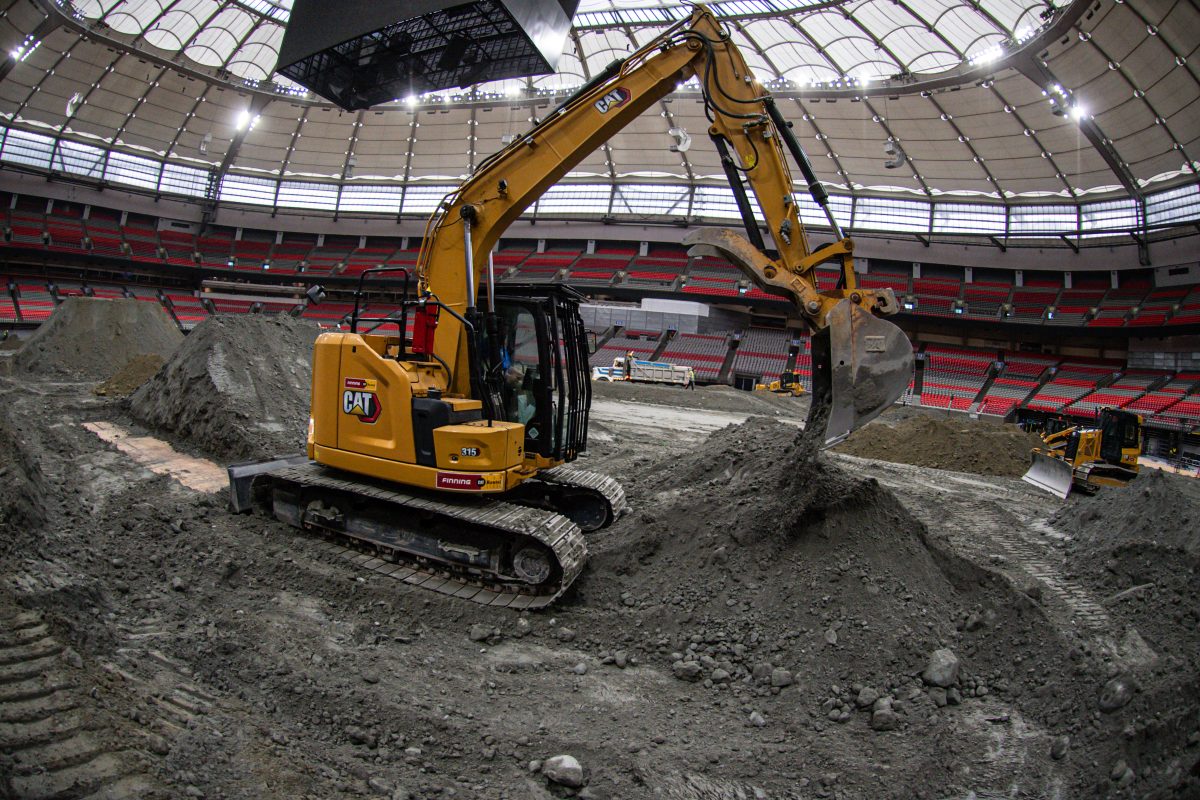
At the core of each track is, of course, the dirt. And thousands of tonnes of it. As World Supercross is a global championship, the dirt differs from location to location. For instance, last year, we saw glacial till used in the Canadian GP, utilising the natural sediment deposited directly by glaciers, consisting of a mixture of clay, sand, gravel, and boulders.
That surface was very different to the hard-pack surface in Sweden or the dirt in Argentina which evolved and became more slippery as the evening temperatures dropped and moisture came out from underneath, presenting a totally unique challenge to the riders.
The jumps are where things get serious. Every takeoff and landing has to be perfect. If the angle’s off, even slightly, it can throw off timing or worse. Riders are hitting these things at speed, committing to triples, quads, and massive combinations where there’s no room for hesitation.

Then you’ve got rhythm sections, which is arguably the heart of modern Supercross. That’s where races are won and lost. Do you go triple-triple? Double-double-triple? Maybe something no one else sees? It’s like a puzzle at 50 mph.
And then there are the whoops. Small mounds that have big consequences for the riders that get them right and skim them. One mistake and it can send you sideways in a heartbeat.
But here’s where it really gets gnarly. The track doesn’t stay the same. Not even close. From the first practice to the main event, it evolves constantly. Lines get rutted out, braking bumps get deeper, jump faces get blown out. What felt perfect in the afternoon can be completely different by night show. That means riders have to keep adjusting, reading the track, finding new lines, and staying sharp the whole time.
And that’s why every round feels like starting over. There’s no such thing as getting comfortable. From a rider’s perspective, that’s the real challenge. You’ve got to figure the track out fast. It is evolving and what makes World Supercross the real test. These tracks are built in days, using different types of dirt only to be ripped apart in hours, and no two tracks are ever alike. For the riders, it’s a constant test of skill, adaptability, and guts. And for fans? It means every single race is a fresh fight, where anything can happen the moment that gate drops.