Round 01
/
08 Aug
Canadian GP

Calgary, Canada
McMahon Stadium
McMahon Stadium
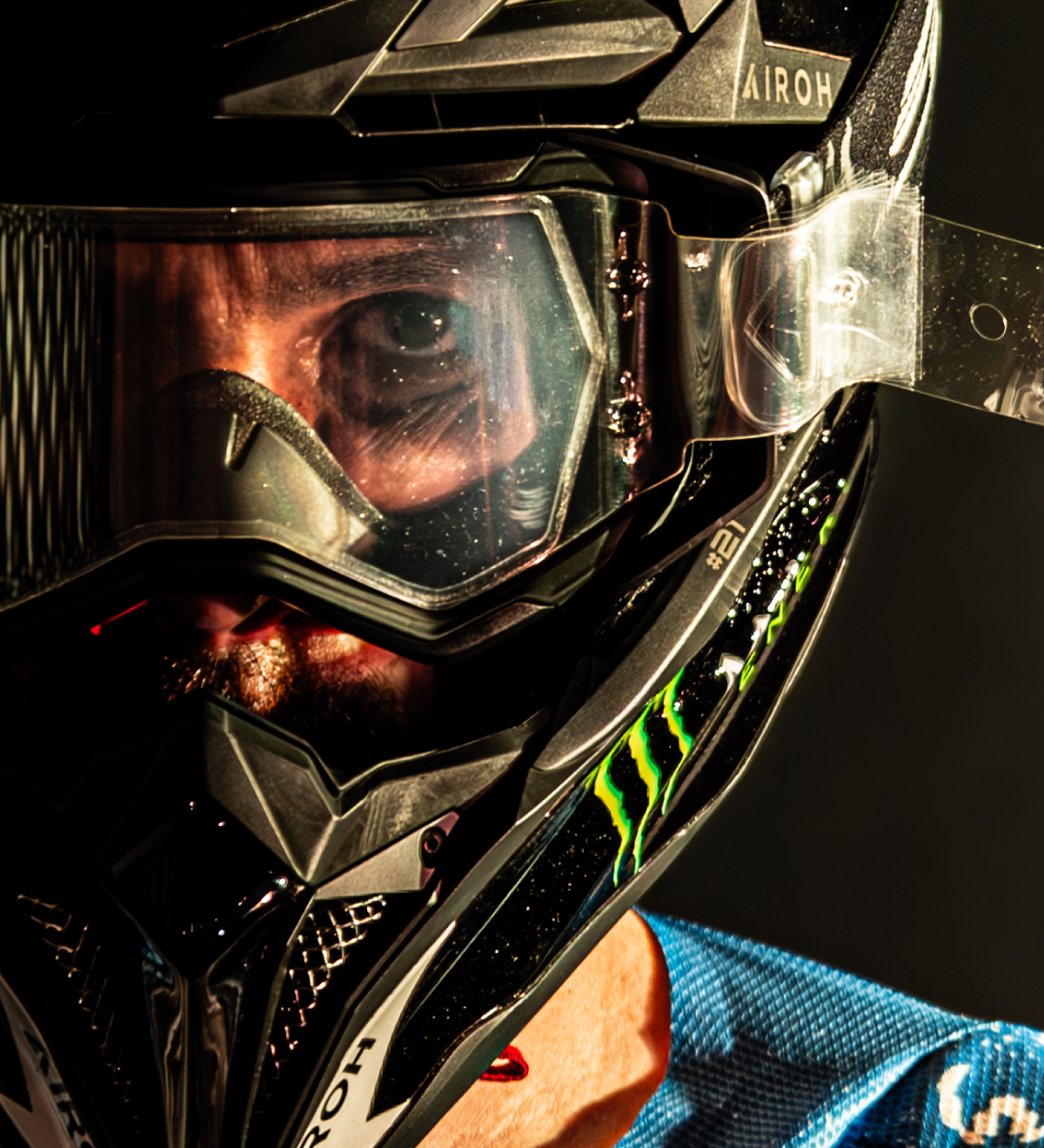
Jason Anderson is in typically laid back fashion as he arrives in Calgary, Canada for the preseason photoshoot. He’s early for his slot and takes a seat as other riders queue up for their photographs to be taken. He’s greeted warmly by Cooper Webb like a long lost friend. Despite Anderson’s languid body language, beneath the surface he’s itching to get back on a bike and race for the first time since March.
For Anderson, the break from racing appears to have delivered perspective more than relaxation. After a lifetime built around competition, training, travel and race weekends, stepping away was not as easy as simply enjoying free time. But now, he’s ready to return, and as the defending world champion in the SX1 class as the new season kicks off in Canada.
For some, carrying the number-one status into a new campaign would bring pressure, expectation and the heavy weight of a target on their back. For Anderson, it sounds much simpler. The 33-year-old is not dressing up the moment or pretending it needs to be anything more dramatic than another chance to race.
“It just feels normal race for me,” Anderson said when asked how it feels to come into the season as defending champion. “I’m just excited to see where we stand and get going. I really enjoy what I do. I enjoy my middle of the week. I enjoy having that purpose of waking up and training and going to the track.”
Anderson has been racing since he was six years old and is now entering what he described as his ’17th or 18th year’ as a professional. In that context, time away did not feel like freedom but instead it was unfamiliar.
“When you wake up and you don’t really have anything to do, it’s just a different lifestyle,” Anderson said. “I’ve been racing since I was six years old, and I’m 33 right now, so I think that’s maybe the longest time I haven’t even just ridden in general, and I didn’t like it.
“We complain about travelling and going to the airport,” Anderson said, “but I do miss even just going to the airport on Friday and then flying home on Sunday. I have a routine, a life routine, and it’s hard to switch that up.”
That routine is now back and with it comes the competitive fire Anderson says is still there.
“To be honest, just at this point in my career, I just want to be racing. I’m 33 years old right now, so I’m kind of getting on the older side,” Anderson said. “But at the same time, I still feel like I have fire to be able to do good, and I think I could still be up front and contend with the fastest guys out there.”
The Canadian GP presents Anderson with a specific challenge: preparing for a supercross race at a time of year when riders are not usually deep into supercross training.
“Getting back in shape at my age is a little tough when you took some time off,” Anderson admitted. “But it’s going good.”
The unusual timing of the World Supercross opener has added another layer. Anderson noted that riding supercross during the summer is different from the normal rhythm of the season, and the conditions in California made the preparation even more demanding.
“It’s tough to ride supercross in the summer because we normally aren’t riding supercross,” he said. “It’s been 100 degrees in California, and it’s a different type of grind than we’re used to getting ready for a supercross race.”
That makes the Canadian GP a welcome change in more ways than one. The chance to race farther north, in more comfortable weather, offers some relief after a difficult block of preparation.
“It’s been enjoyable,” Anderson said. “It’s fun to be able to come up here, and it’s nice to be a little bit further north and be in some nicer weather.”
For all the challenges of the build-up, Anderson does not sound like a rider looking for excuses. He sounds like one adjusting to the circumstances, accepting the work, and waiting to see how his preparation translates when the gate drops.

World Supercross is not only a test of speed. It is also a test of adaptability. Riders must deal with different venues, surfaces, schedules, time zones and travel demands. Anderson’s title-winning campaign gave him a clear understanding of what that requires.
He believes one advantage is that supercross comes naturally to him. That helps when the calendar asks riders to travel across continents and adapt quickly.
“I’m lucky that Supercross does come somewhat natural to me,” Anderson said. “Even if we went from Sweden to South Africa, taking the week off is a little tough, just as far as maybe fitness goes,” he said. “It’s just a little bit harder on that side when you’re not having the muscle memory of riding during the week.”
Last season also forced Anderson to make quick adjustments. He recalled a demanding sequence when he travelled from Australia back to America and then on to Sweden because he needed time with the motorcycle after a difficult Australian round.
“Australia didn’t go very well for me at all,” Anderson said. “I just needed to figure out how to get off the gate. And I think I figured that out.”
That kind of problem-solving could be important again in 2026. In a compact and international championship, riders cannot afford to wait too long to fix weaknesses and Anderson’s experience of making corrections under pressure could help him defend his crown.
This year, he expects to fly home after each round, a decision that may help him maintain a more familiar training and recovery pattern between races.
The central question heading into the Canadian GP is obvious: can he retain the World Supercross title? His answer is measured. “I think we’re going to find out,” he said. “To be honest, I’m just trying to enjoy myself, try my best.
“I always feel like I’m talented enough,” Anderson said. “And if I match talent with the work, I can always be pretty competitive.”
That line might be the key to his season. Anderson is not promising dominance. He is not making bold claims about sweeping the championship or immediately controlling the field. Instead, he is framing the campaign around effort, enjoyment and competitiveness.
Whether it takes him a few rounds to reach full speed remains to be seen. Asked if he might need time to get up to pace, Anderson replied, “I hope not.” But the reality of returning after a break, combined with the unusual preparation window, means the Canadian GP will be the first real test of where he stands.
A strong opener would send a clear message that the defending champion is ready immediately. A more measured start would not necessarily end his title defence, but in a championship where every round carries weight that early momentum could prove important.
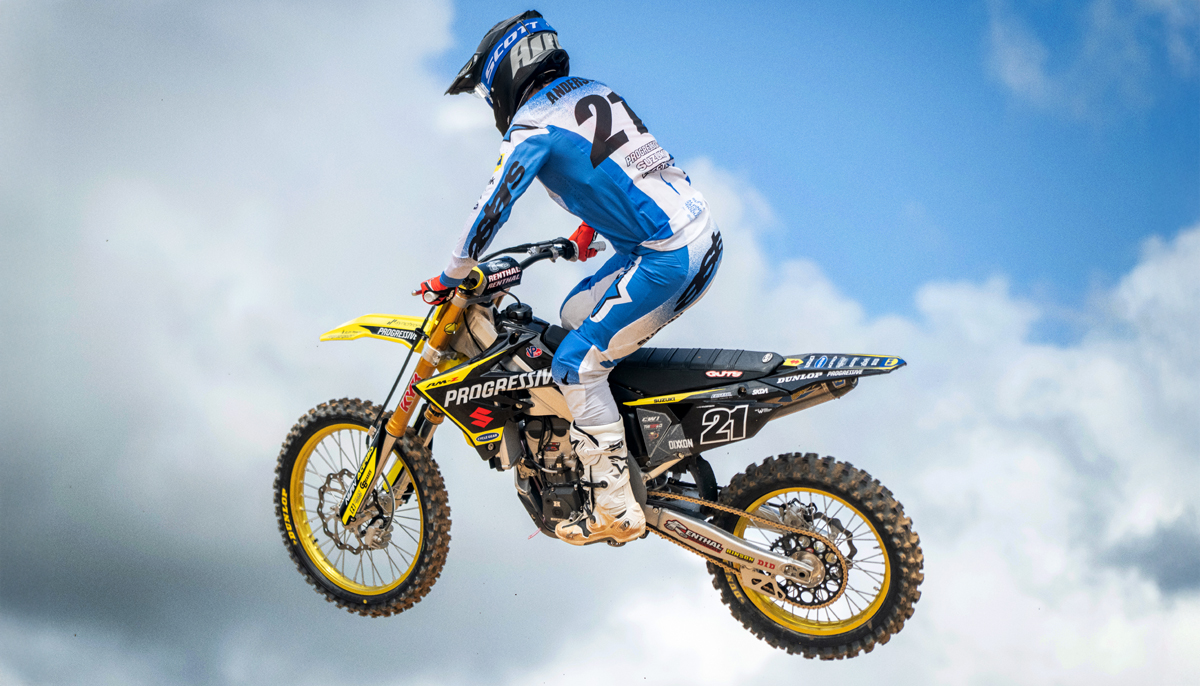
The 2026 World Supercross season also brings a stronger emphasis on the team aspect, and Anderson sees that as an interesting development.
That team dynamic adds another layer to the championship narrative. Individual performance will always be central in supercross, but a well-rounded team can influence strategy and the broader fight for honours across the season, and Anderson believes his own team is in a solid position.
“I think our team overall is pretty well rounded,” he said. He also acknowledged that other teams look strong heading into the new campaign, specifically pointing to Rick Ware Racing as one to watch.
“There’s a couple teams out there that are pretty well rounded as well,” Anderson said. “I would say probably Rick Ware is pretty strong right now.”
That respect for the competition reflects the bigger picture facing Anderson in 2026. He may be the defending champion, but he is not entering a static championship. Rivals are improving, teams are strengthening, and the format continues to evolve.
Every season opener needs a central storyline, and the Canadian GP has one in Anderson. A defending World Supercross champion returning after time away from racing is a natural focus, especially when that rider is as candid about the process as Anderson has been.
He missed the sport. He missed the routine. He missed the purpose. And now he returns not only with a championship to defend, but with a renewed appreciation for the life that racing gives him.
There is also a sense that Anderson is at peace with where he is. He knows he is older than many of his rivals. He knows getting back into shape is harder than it once was. He knows the title defence will not be automatic. But he also knows he can still contend with the fastest riders in the world.
That balance makes his 2026 campaign compelling. Anderson is not chasing relevance. He is chasing performance. And if his preparation, talent and competitive fire come together, the Canadian GP could be the start of another serious title run.
For now, the defending champion is keeping it simple. He wants to race, find out where he stands, and enjoy the process. After time away from the sport, that might be the strongest sign of all that Jason Anderson is ready to begin again.